The 50/30/20 rule explained with real numbers
Half your take-home pay to needs, 30% to wants, 20% to savings and extra debt payments. What counts in each part, an example, and when to bend it.
 Ibils teamUpdated 2 min read
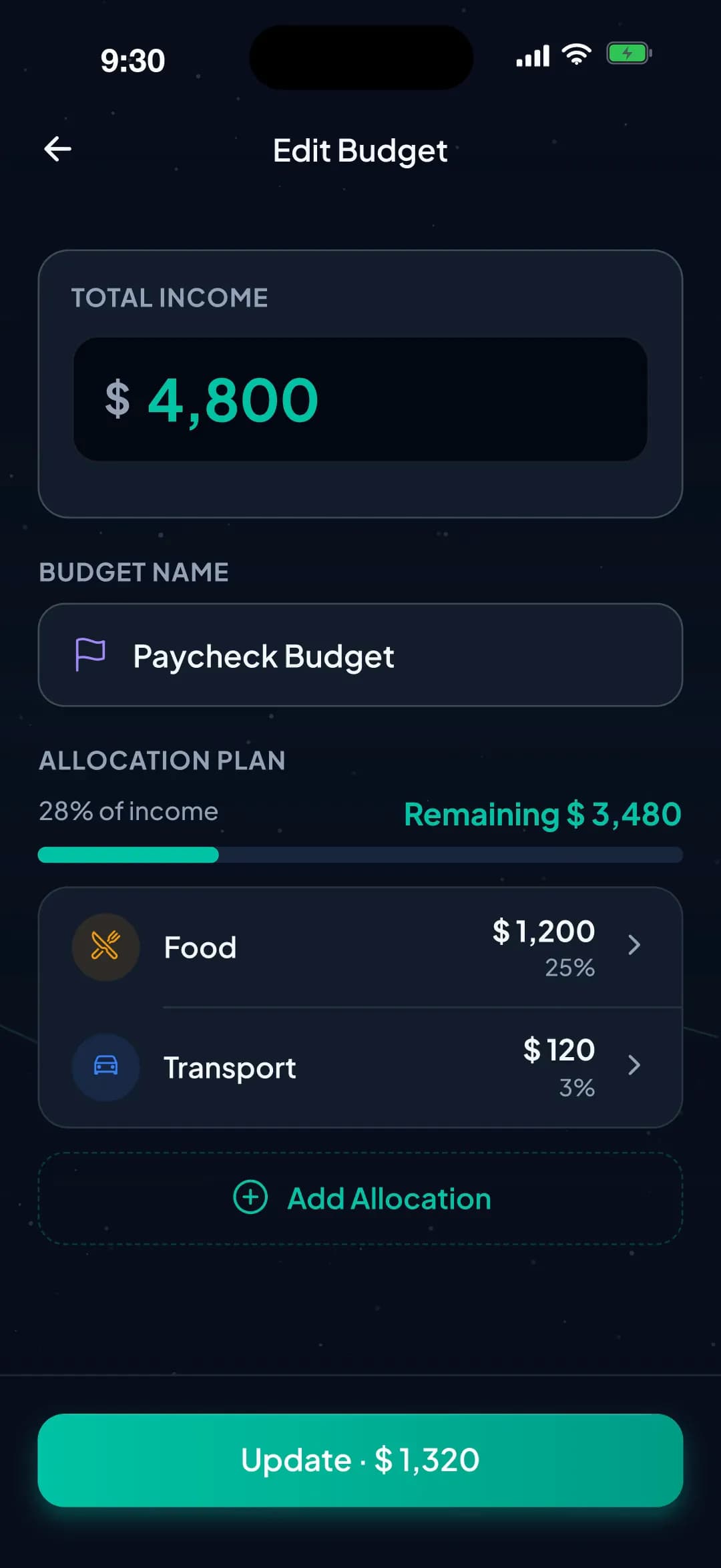
Step 1: Turn the split into a budget
Enter your take-home pay, add needs and wants, and leave savings unassigned.
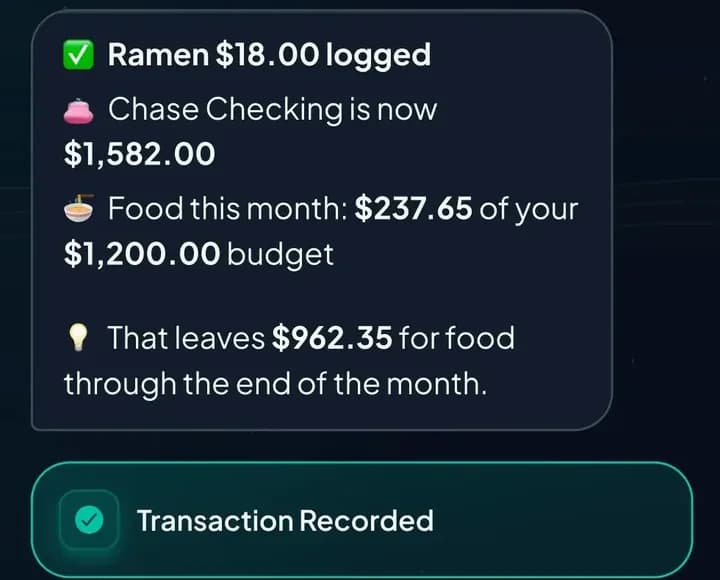
Step 2: Log what you actually spend
Add each expense as it happens; the chat reply shows the category's monthly total.
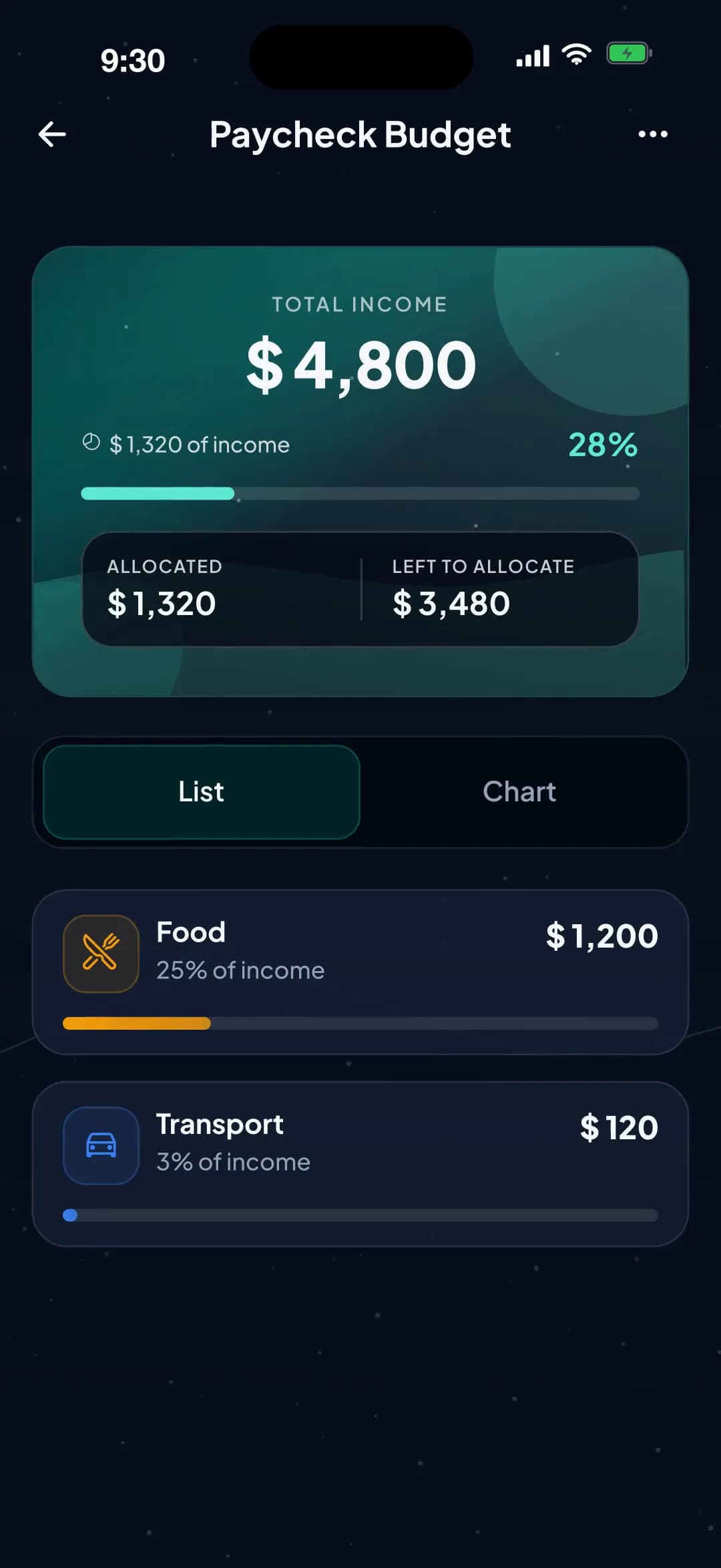
Step 3: Check each category
Open the budget to see each category's share of income and spending.
Step 4: Point the savings share somewhere
Send the savings share to an emergency fund first, then to named goals.
An example
On $4,200 take-home, that's $2,100 for needs, $1,260 for wants and $840 for savings. If rent, groceries and a car payment already cost $2,500, needs run $400 over.
Common questions
What is the 50/30/20 rule?
A budgeting guideline from the 2005 book All Your Worth by Elizabeth Warren and Amelia Warren Tyagi. It splits after-tax pay into 50% needs, 30% wants and 20% savings and extra debt payments.
What counts as a need, a want or savings?
Needs are bills you'd still owe without a job: rent, groceries, utilities, transport to work, insurance and minimum debt payments. Wants are what you could cut, like dining out, streaming and travel. Savings is money you keep, plus debt payments above the minimum.
Is 50/30/20 based on gross or net income?
Net, your pay after tax and deductions. If your employer takes retirement contributions out of your paycheck, you can add them back and count them as savings.
What if my rent alone is more than half my pay?
Start from 60/20/20 or 70/20/10 and move toward 50/30/20 as your pay grows. A bigger place than you need is partly a want.
What if my income changes every month?
Build the budget on your lowest month of the last six and put any extra into savings first.
Can I use 50/30/20 in the Ibils app?
Yes. If you give your monthly income during sign-up, your first budget is already split 50/30/20, with the savings share left unassigned. Later months have no preset: enter your income and add an allocation for each need and want, and Ibils won't let them pass your income.